
How to Protect Plants From Weed Eater Damage
Published . Updated .
How to protect plants from weed eater damage starts with removing the need to bring spinning line close to leaves, stems, bark, or exposed roots. A clear no-trim border is more reliable than trying to stop the tool at the last second.
Protect the plant first, then choose the maintenance method. Young trees, soft stems, low flowers, and plants hidden by tall grass need the most space.
Choose the Safest Protection for Each Plant
- Flowers and soft plants: Use a visible edging strip and finish the inside edge with hand shears.
- Shrubs: Create a mulch or gravel ring that keeps turf away from the stems.
- Young trees: Keep grass back from the trunk and use a loose, ventilated guard only when needed.
- Garden rows: Use continuous edging so the operator can follow one clear line.
- Temporary planting: Place a removable shield before trimming and remove it when the work is done.
University of California guidance notes that string and blade trimmers can throw debris and harm nearby desirable plants. It recommends suitable protective equipment and stopping the cutting head when working around plants that should remain untouched. See the UC string-trimmer guidance.
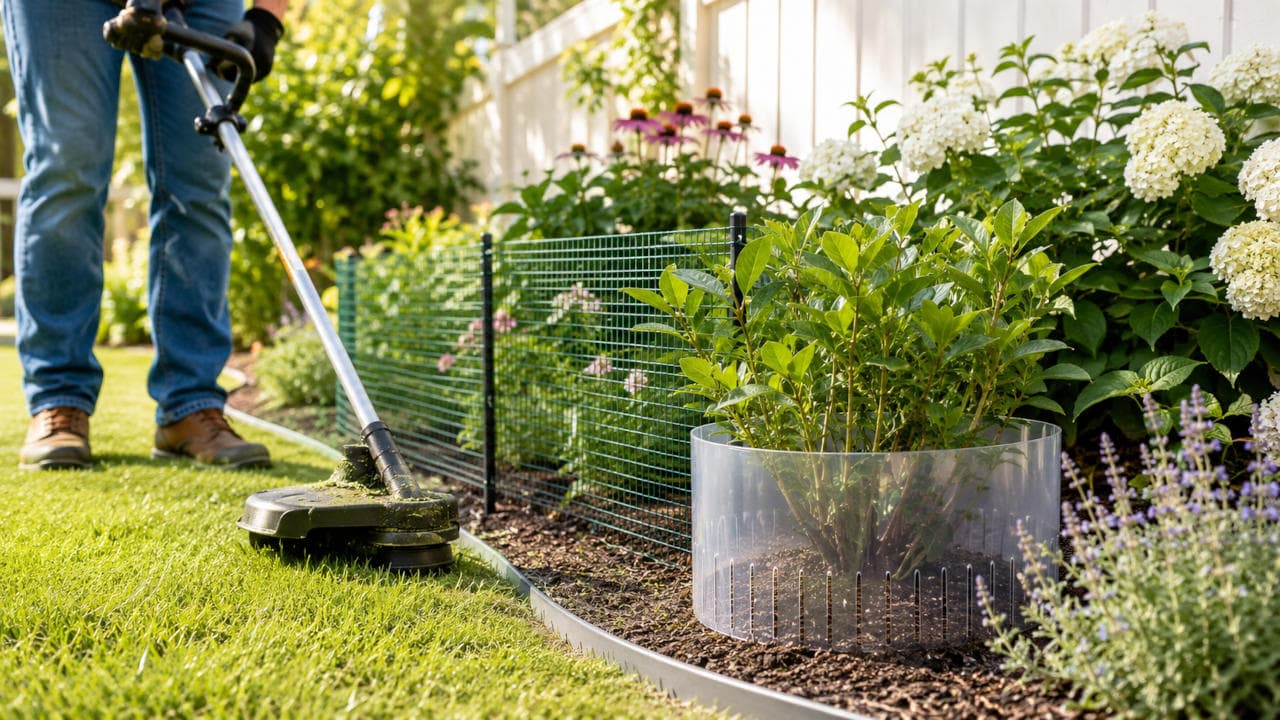
Create a No-Trim Ring Around Individual Plants
- Remove grass and weeds by hand around the plant.
- Keep the root flare and main stems visible.
- Add a thin mulch layer without piling it against bark or stems.
- Install edging outside the main stem area if the border needs a firm edge.
- Make the ring wide enough that routine trimming can stay outside it.
Inspect the ring as the plant grows. Expand it when branches, stems, or surface roots reach the trim zone.
Install a Continuous Garden-Bed Edge
A continuous edge is useful when several plants share one bed. Metal, plastic, composite, brick, or concrete edging can work when it is stable, visible, and free of sharp exposed ends.
Set the edge so mower wheels can follow it without crushing plants. Keep loose stones out of the line path because a trimmer can throw them.
Use a Guard Without Trapping Moisture
A trunk or stem guard can help where accidental contact is likely, but it should not grip the plant, hide damage, or hold wet material against bark.
- Choose a guard with smooth edges and ventilation.
- Leave room for growth and movement.
- Keep the guard above soil and mulch where the design allows.
- Remove it regularly to check for insects, rubbing, moisture, and girdling.
A guard is a backup. Keep the cutting line away from it instead of using it as a target.
Place a Temporary Shield Before Trimming
For one small area, place a board, rigid plastic panel, or purpose-made shield between the cutting head and the plant. Hold it from the safe side, or secure it before starting the tool.
Never ask another person to stand beside the running trimmer and hold the shield. Stop the tool before moving the barrier.
Use Safer Trimming Habits
- Walk the area and remove stones, wire, toys, and loose debris.
- Read the tool manual and keep its guard in place.
- Wear eye protection, hearing protection, long pants, gloves, and sturdy footwear.
- Keep people and pets out of the work area.
- Use a slow, controlled pass near beds and point debris away from plants, windows, vehicles, and people.
- Release the trigger and let the head stop before stepping over a border or moving a shield.
The Virginia Tech string-trimmer safety guide recommends inspecting the tool, keeping guards in place, using protective equipment, and watching for exposed wires and cords.
Finish Tight Areas With a Hand Tool
Hand shears, grass shears, or a small hand hoe are slower but give better control beside soft stems and low branches. Use them where no safe path exists for the trimmer head.
Keep blades clean and sharp. Check the soil before using a hoe so shallow roots, irrigation tube, or low-voltage cable are not damaged.
Be Careful With Herbicides Near Plants
Do not use an herbicide as a general shortcut around valuable plants. Products differ, and some can injure roots or foliage beyond the visible spray area.
Use a product only where its label allows, follow every direction, and shield desirable plants when the label requires it. The EPA explains why pesticide label directions matter.
Check the Protection During Yard Maintenance
- Edging is still anchored and visible.
- Mulch is not touching stems or covering the root flare.
- Guards are not tight, wet, cracked, or hiding damage.
- No loose stone or broken edging sits in the trim path.
- Irrigation parts and lighting wires remain outside the cutting line.
Use the same no-trim approach around structures. See how to protect siding from weed eater damage and how to protect fence posts from a weed eater.
Ready for the Next Step?
Use the related guides and tools on Home Care DIY Hub to plan the job before you start.